


How to clean turquoise jewellery: don't soak | 2026
Clean turquoise jewellery with a soft, dry cloth first. If dirt remains, lightly dampen the cloth with plain water, wipe the stone without scrubbing, then dry the entire piece immediately. Do not soak turquoise or use ultrasonic cleaners, steam, vinegar or jewellery-cleaning solutions; moisture and chemicals can affect the stone or its finish.
Why this matters
Turquoise needs a different routine from the metal holding it. A cleaner that removes tarnish from a setting is not automatically safe for the stone, and a brush that reaches a narrow gap can catch an edge or setting. Treat the turquoise as the limiting material: choose the gentlest method that removes the dirt, rather than the strongest method the metal can tolerate.
In 2026, the useful question is not whether a piece looks sturdy enough to wash. It is whether you know how its stone and setting will respond. If you are also checking what the stone is before caring for it, the guide to telling whether turquoise jewellery is genuine addresses that separate question. Appearance alone does not tell you which cleaning treatment a particular piece has received.
How do you clean turquoise jewellery without damaging it?
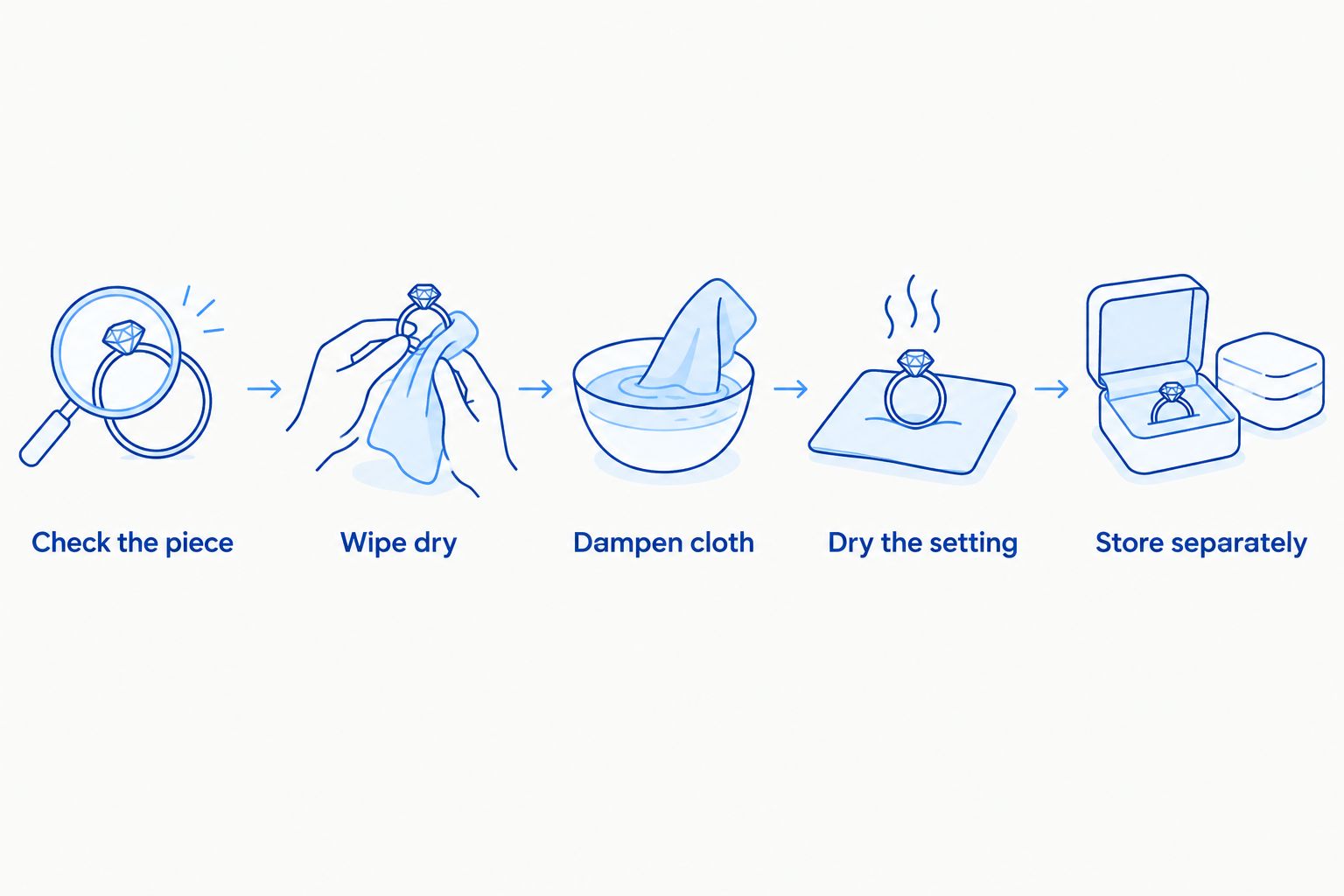
Use the following sequence for routine surface dirt on an intact piece. Stop before adding water if a stone moves in its setting, the surface is flaking or a decorative component is coming away. Cleaning cannot repair those problems, and pressure from a cloth can make them worse.
- Check the whole piece. Look for loose stones, bent claws, open joins and visible cracks. Note whether the jewellery also contains enamel, pearls, opal or other materials that need their own care.
- Wipe the turquoise dry. Use a clean, soft, lint-free cloth and light pressure. Support a pendant or ring from behind so you do not pull against the setting while wiping.
- Use a lightly damp cloth only if needed. Dampen a clean section with plain water; it should not drip. Wipe the soiled area gently instead of immersing the jewellery.
- Remove surface moisture. Follow immediately with a dry section of cloth. Pay attention to the edge where the stone meets its setting, without pushing fabric under a claw or into a join.
- Let the piece finish drying before storage. Set it on a clean, dry surface away from direct heat. Once dry, store it so harder jewellery cannot rub against the turquoise.
This is a surface-cleaning method, not a way to flush dirt from behind a stone. If debris is trapped beneath a setting, do not try to dig it out with a pin, toothbrush or cloth corner. Ask a jeweller to assess the setting instead.
Which cleaning method belongs on the stone?
The methods below are not interchangeable. Start with the dry cloth; move to the damp cloth only when the first pass leaves visible dirt. A jeweller is the right next step for a structural problem, not a stronger household cleaner.
| Method | Best for | Main benefit | Main limitation |
|---|---|---|---|
| Soft, dry cloth | Dust, fingerprints and light surface marks | Adds no moisture or cleaning chemical | Does not remove dirt trapped beneath a setting |
| Lightly damp, soft cloth | Surface dirt that remains after dry wiping | Gives you more cleaning action without soaking | Requires immediate, thorough drying |
| Professional inspection | Loose stones, damaged settings or persistent trapped dirt | Addresses the condition of the piece before further cleaning | Is not a substitute for routine wiping at home |
Best for routine care: the soft, dry cloth. Its limitation is clear: it cannot reach beneath a fitted stone. Best for visible surface dirt: the lightly damp cloth, provided the piece is intact and you dry it straight away. Neither method calls for a basin of water.
Why does turquoise cleaning advice vary?
A care instruction for one piece should not be applied blindly to every blue-stone ring or necklace. These factors change what you should do:
- Stone condition. A smooth, firmly set stone can be wiped gently. A cracked, loose or flaking stone calls for inspection before cleaning.
- Surface finish. Turquoise can receive treatments or finishes, but the appearance of a finished piece does not establish which ones it has. Avoid experimenting with solvents to find out.
- Setting design. Claws, enclosed edges and decorative overlays create places where moisture or dirt can remain. Wipe their accessible surfaces; do not force tools into the gaps.
- Metal and plating. A cleaning product intended for silver, gold or plated metal is not automatically suitable for turquoise. Keep metal-care products off the stone.
- Other materials. Enamel and additional gemstones can impose their own cleaning limits. Use the gentlest approach that suits every component, or ask a jeweller.
- Type of dirt. A fingerprint needs a different response from a substance that has soaked into a stone. Repeated scrubbing is not a fix for a persistent stain.
For a newly acquired or inherited piece in 2026, do not infer its treatment history from its colour. If the surface looks altered or a stain remains after gentle wiping, leave it alone until a jeweller has seen it.
How do you clean a turquoise ring?
Remove a turquoise ring before washing your hands or using lotions, then wipe it after wear with a soft, dry cloth. Rings are handled often, so check that the stone is secure before applying even light pressure. If grime sits around the setting, use the lightly damp cloth on accessible surfaces and dry the edge carefully; do not soak the ring to reach underneath.
Gemondo's Classic Oval Turquoise & Diamond Ring in 9ct Yellow Gold shows why you should clean the whole piece according to its most sensitive component. Best for someone who wants turquoise alongside diamonds: the ring combines those stones in a 9ct yellow gold setting. The trade-off is that a cleaning method suitable for gold or diamonds alone should not be used on the assembled ring without considering the turquoise.
A statement ring and a pendant do not face identical handling during wear, but the turquoise-care rule stays the same. Keep chemicals off the stone, check the setting and finish with a dry cloth. In 2026, choose a care routine you will actually follow after wearing the piece rather than reserving cleaning until dirt builds up.


Can you use jewellery cleaner on turquoise?
Do not put a general-purpose jewellery cleaner on turquoise unless a qualified jeweller has confirmed it is suitable for that specific piece. Products intended to clean metal or harder stones are not a safe default for a turquoise setting. The same distinction applies to ultrasonic machines and steam cleaning: neither is part of the gentle home routine described here.
Do not use vinegar, bleach, alcohol, toothpaste or abrasive powders to tackle a mark. They introduce chemicals or friction where a soft cloth is the safer starting point. If a mark does not lift with gentle wiping, stop rather than repeating the process with more pressure.
For metal near turquoise, use a clean cloth on the accessible metal surface and keep any dedicated polishing cloth away from the stone. If tarnish remains close to a setting, a jeweller can advise on the assembled piece. Cleaning the metal more aggressively is not a reason to expose the turquoise to metal cleaner.
How should you dry and store turquoise jewellery?
After using a damp cloth, dry the stone and metal immediately, including the visible edges of the setting. Do not use a hairdryer or place the piece beside a heater to speed things up. Allow it to finish drying on a clean surface before putting it away.
Store turquoise jewellery separately from pieces that can knock or scratch it. A soft pouch or a separate compartment keeps stones and metal edges from rubbing together. Make sure the pouch and jewellery are dry first; storage is not a drying method.
In 2026, make that separation part of the routine after each wear. Wipe the piece, check the setting and put it away on its own. This also makes it easier to spot a changed surface or loose stone before the next cleaning attempt.
What if the turquoise looks dull or changes colour?
First distinguish removable surface dirt from a change in the stone's appearance. A single gentle wipe with a dry cloth, followed by the damp-cloth method if necessary, is enough to test whether ordinary surface dirt is the cause. If the colour still looks different, stop cleaning: stronger chemicals and repeated rubbing are not a diagnosis.
Keep the piece away from further contact with cosmetics and cleaners while you seek advice from a jeweller. Describe what touched the jewellery and what you used to clean it. Do not assume a change proves that the turquoise is fake, untreated or permanently damaged; none of those conclusions follows from colour alone.
FAQ
What's the safest way to clean turquoise jewellery at home?
Wipe turquoise jewellery with a soft, dry cloth, then use a lightly damp cloth only if surface dirt remains. Dry the stone and setting immediately; never soak the piece.
Can I wash a turquoise ring with soap and water?
Do not wash a turquoise ring by soaking or running it under water. For routine dirt, wipe it dry first, then use a cloth lightly dampened with plain water and dry it straight away.
Can I put turquoise jewellery in an ultrasonic cleaner?
No. Keep turquoise jewellery out of ultrasonic cleaners and use a soft cloth for routine surface cleaning instead.
Can I use a silver polishing cloth on turquoise?
Keep a silver polishing cloth off the turquoise stone. If you use one on accessible silver, avoid the stone and its setting; ask a jeweller about tarnish close to the turquoise.
How do I clean dirt around a turquoise setting?
Wipe accessible areas gently with a soft cloth, using minimal water only when needed. Do not push a brush or sharp tool beneath the stone; trapped dirt calls for a jeweller's advice.
What should I do if my turquoise stone moves when I clean it?
Stop cleaning and have the setting inspected by a jeweller. Even light wiping can put pressure on a stone that is no longer secure.
Why does my turquoise still look dull after cleaning?
A dull appearance that remains after gentle wiping is not a reason to scrub harder. Stop using cleaners and ask a jeweller to assess the surface and setting.
One last thing
Check the setting before the cloth touches the stone. That small pause matters more than choosing a stronger cleaner: a loose turquoise needs repair or inspection, not another cleaning method. Gemondo turquoise jewellery, like any stone-set jewellery, is best cared for as a complete piece rather than as a stone and metal cleaned independently.


